Pillows come with so many fillings it is difficult to know which filling is best for you. We will run through some common pillow fillings with pros and cons.
Polyfibre
Pros: Cheap, hypoallergenic, and easy to care for.
Cons: May not be as supportive or durable as other materials. Goes to landfill at end of life.
Foam
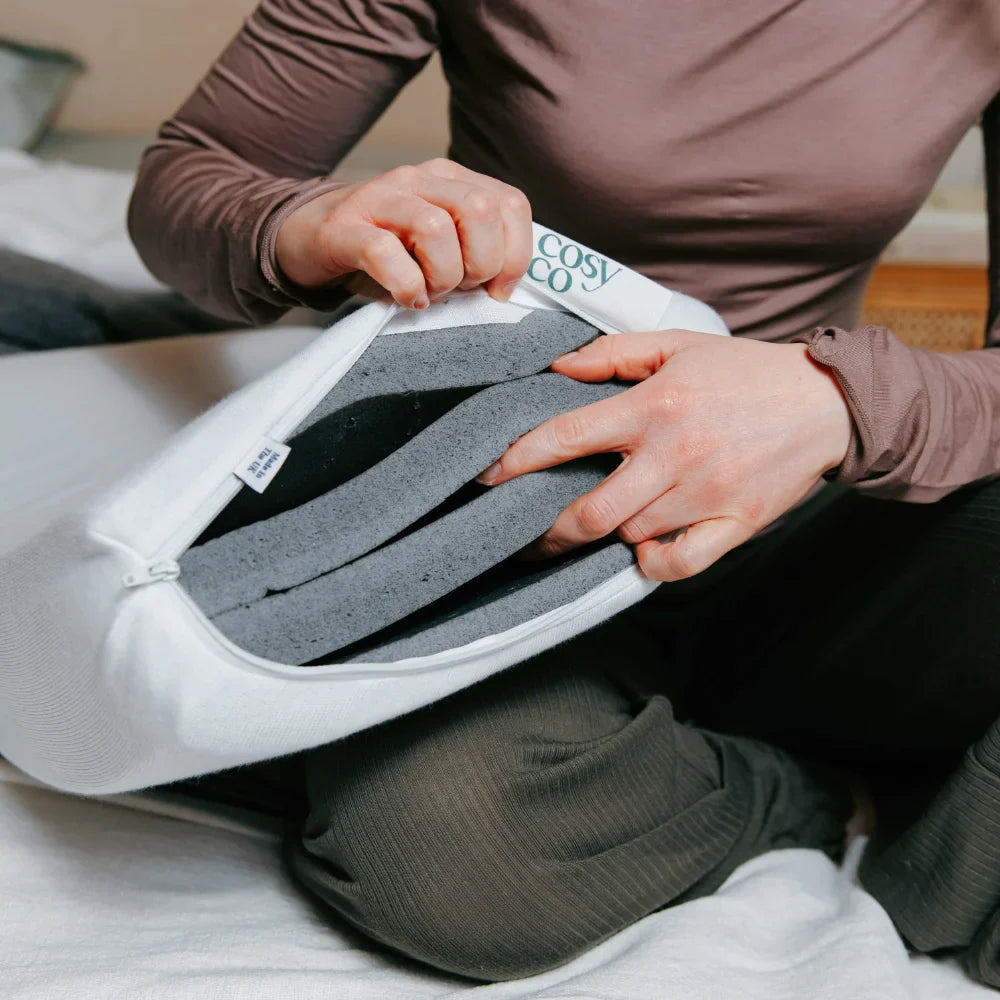
Pros: Supportive, durable, and can be hypoallergenic.
Cons: Can be less breathable and may emit chemicals during manufacturing. Goes to landfill at end of life.
Memory Foam
Pros: Contours to your body for personalized support, pressure-relieving, and can be hypoallergenic.
Cons: Can be less breathable, may emit chemicals during manufacturing, and can be expensive. Goes to landfill at end of life.
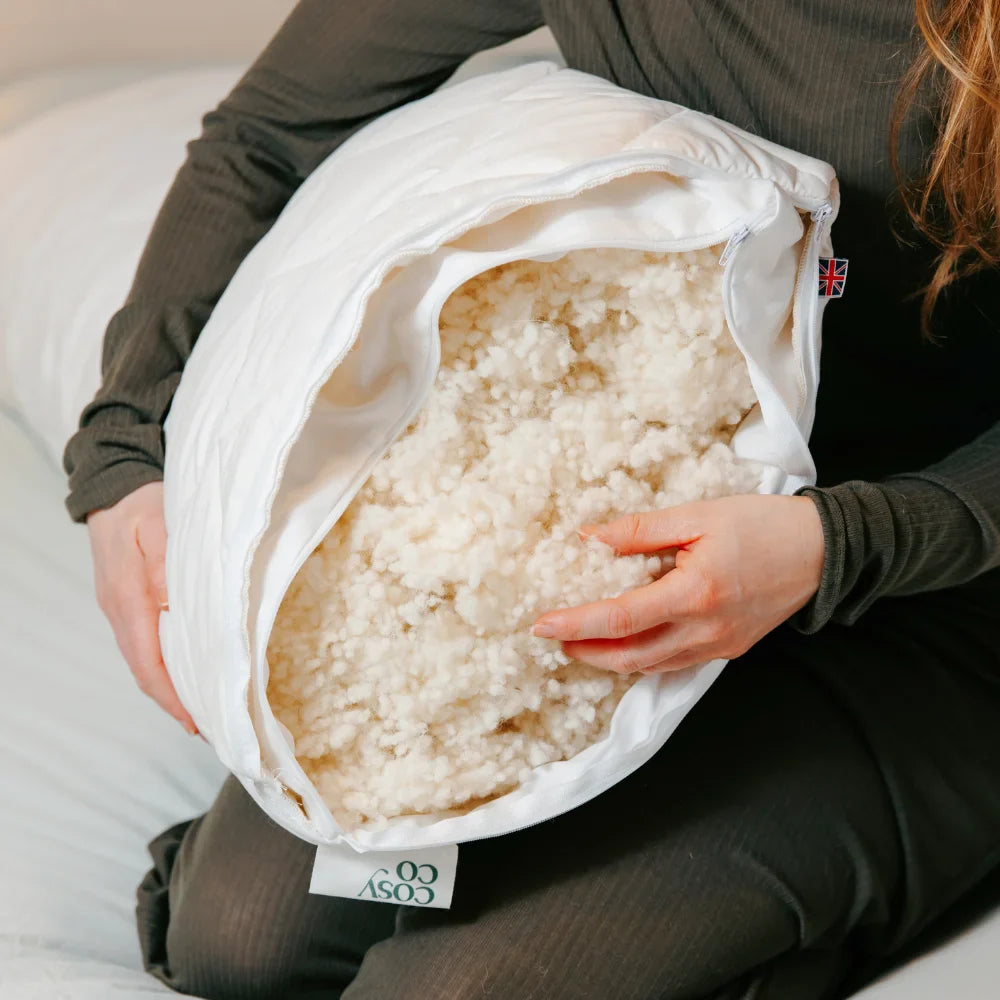
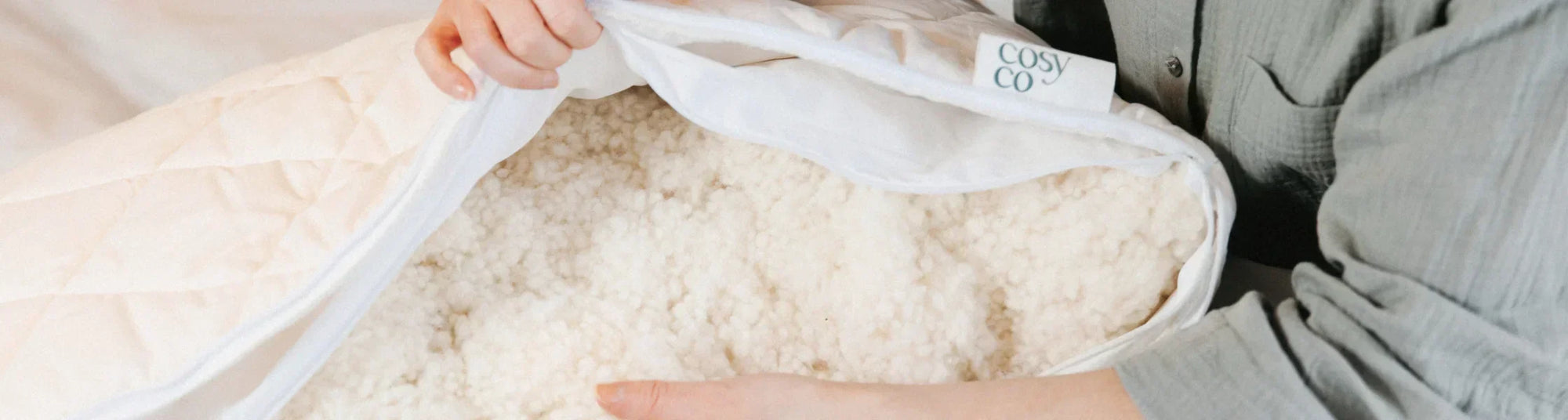
Pros: Natural, sustainable, hypoallergenic, temperature-regulating, and breathable. Breaks down naturally at end of life.
Cons: Can be heavier.
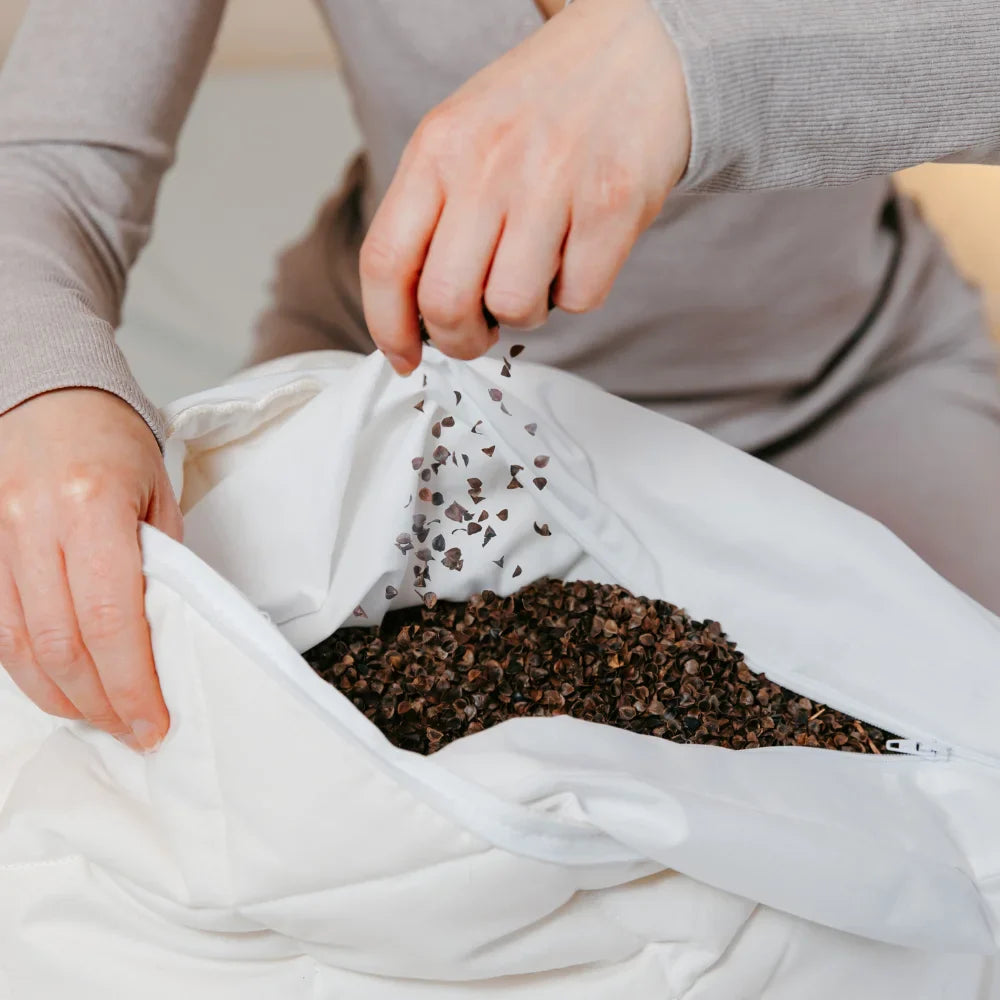
Pros: Natural, breathable, hypoallergenic, customisable height. Breaks down naturally at end of life.
Cons: Noise and firmness (hard).
Pros: Supportive, durable, breathable, hypoallergenic. Breaks down naturally at end of life.
Cons: Cost and allergic reactions.
So which pillow filling is best?
It depends what your criteria are. We think natural is always the best option. Overall if you suffer from allergies, care for the planet and want a sustainably sourced product we would recommend wool if you currently like the feel of a polyfibre pillow. Latex if you like the feel of a foam or memory foam pillow and buckwheat hulls if you like a very firm pillow.
Other important things to note when buying a pillow?
Where is it made?
A locally manufactured pillow reduces transport emissions. It also guarantees worker rights if made in the UK (high relative worker pay & rights).
The outer casing material
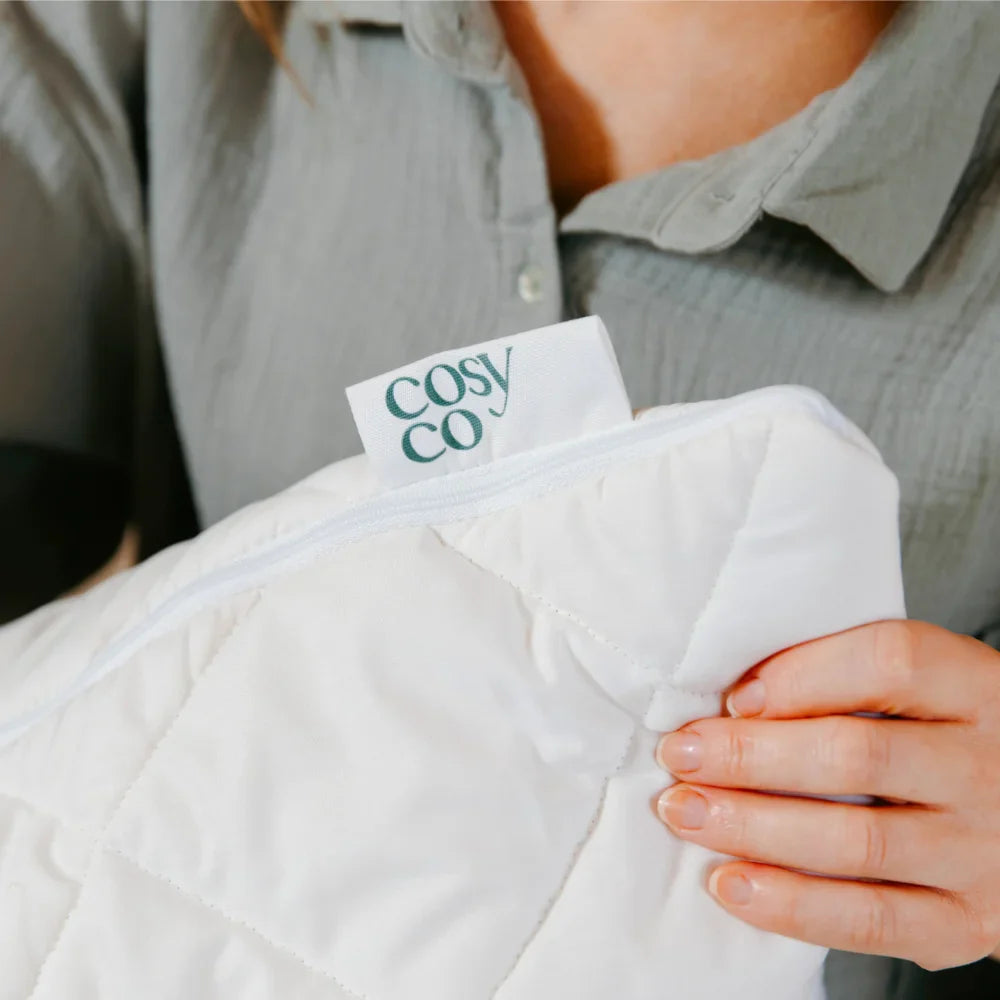
Look for 100% cotton for the outer casing. It is no good purchasing a pillow with a natural filling only to have a synthetic outer cover.
Guarantee?
Does the pillow have a guarantee? This is a sign of a good quality product.